|
The History of the Queen Mary
A long and illustrious career...
|
|
From Birth to Berth...
A Tribute to the Grandest Queen of all!
Cunard Line R.M.S. Queen Mary “From Birth to Berth” RMS Queen Mary was, and is, one of the grandest Passenger liners ever built. This giant of the sea offered luxury and a standard unequalled in shipbuilding history. During her remarkable career, from her maiden voyage in 1936 until this day, Queen Mary has played various roles, from an elegant Ocean Liner, to a WWII trooper, then after 1001 Atlantic crossings, RMS Queen Mary was preserved and became a fine hotel and tourist facility in Long Beach California. One of the great joys of visiting this legendary ship, is knowing the unbelievable amount of history that took place on her, and understanding her significance not only as a luxurious ocean liner, but as one of the most important ships of the WWII era. Winston Churchill once said of her: “Built for the arts of peace and to link the old world with the new, the Queens challenged the fury of Hitlerism in the battle of the Atlantic. Without their aid, the day of final victory must unquestionably have been postponed.”. Churchill not only traveled on the Queen Mary three times during World War II, he also signed the "D Day" Declaration on board, which would turn the tide of the War and lead the eventual victory of the Allies, defeating Hitler for good. But more on The Queen Mary's wartime efforts later. First, let's start at the very beginning...
|

|
Cunard Plans Two New Ships
The Creation of "Hull #534"
RMS Queen Mary was conceived in the late 1920’s by the legendary Cunard Line, a company that had been providing luxurious transatlantic crossings since the early 1800’s. (On a personal note, Henry's great great Grandfather, Henry Farnam, the well known Railroad Owner/Builder and Philanthropist, sailed back from Europe on a Cunard ship in the mid-1800's, at the request of his friend, Abraham Lincoln, who had asked him to come back to the U.S. early from an extended trip abroad, to vote for him for President.) |

|
Hull #534 Becomes The Queen Mary
Due to the financial crisis of the “Great Depression”, Cunard was unable to continue work on the new ship, and so Hull #534 languished for several years, as Cunard attempted to secure the necessary funding. Cunard applied to the British Government for a loan to complete #534. The loan was granted, with enough money to not only complete the new ship, but also enough to complete a planned second ship, known only as “Hull 552” (which would eventually become the famed R.M.S. Queen Elizabeth). There was one condition, though, of this loan: Cunard would have to merge with the failing “White Star Line”, which had been forced by the depression to cancel their planned “Oceanic”. Cunard and White Star had been chief rivals for many years, but now, as one company, they would elevate the standard of British Ocean Liners to a new heights. As the “White Star” name had always been synonymous with first class service and elegance, the now “Cunard White Star” line would provide the highest levels of service and luxury. So, now, with enough money to complete Hull #534, the question became: what to name her? Cunard had traditionally chosen names that ended with “ia” (Lusitania, Coronia, etc.), and White Star had traditionally chosen names that ended with “ic” (Titanic, Britanic, etc.). So the decision was made to break away from those two traditions, and name the new ships after much loved British Queens. The choice for Hull #534 was obvious: Queen Victoria had been one of the most influential and beloved monarch’s in Britain’s history, and it was only right that the new ship would bear her name. (And, quite cleverly, this allowed for a continuation of their tradition of ending their ship’s names with “ia”!) So, in a bow to tradition and royal etiquette, the heads of Cunard requested a meeting with the current reigning monarch, King George V (Queen Victoria’s grandson), to formally request permission to use his grandmother’s name for the new ship. In an attempt to show great deference to the King’s grandmother, the Cunard leaders phrased the request in this way: “We would like to name the new ship after England’s greatest Queen”. To which, King George V, responded “My wife will be delighted!”. King George’s wife being, of course, Queen Mary. And thus the new name was chosen. (After all, who would want to tell the King that his wife was not who they considered to be “England’s Greatest Queen!”). This story was, of course, officially denied for many years by the Cunard White Star company, but it was finally confirmed in 1979 by former Washington Post editor, Felix Morley, who had sailed on Queen Mary’s maiden voyage as the guest of Sir Percy Bates, Chairman of the Cunard Line. Bates told him the true story of the naming of the ship on the condition that it wouldn’t be printed during his lifetime. Morley kept his promise. But happily, the story was eventually proven to be true. |
|
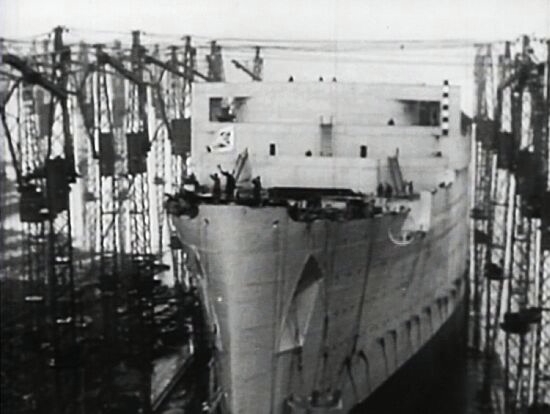
The RMS Queen Mary is Officially Launched
September 26, 1934
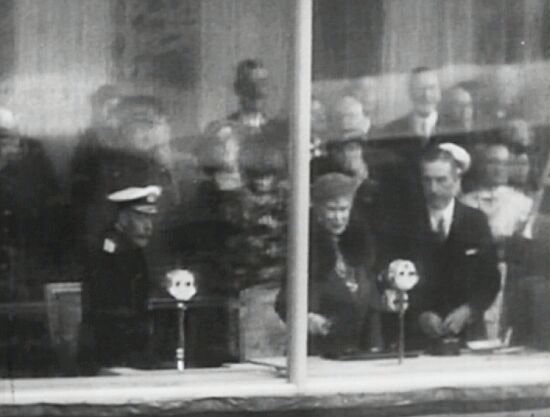
Christened by Queen Mary herself, the R.M.S. Queen Mary slipped into the water for the first time on September 26, 1934. And thus began a long and illustrious career of the ship that would come to be known as "The Grand Lady of the Seas". |
|
Queen Mary Christens Her Ship
A Legend is Officially Born
|
|
Transatlantic Service Unlike Any Other
Speed, Comfort and Luxury
|

|
The Maiden Voyage
May 27, 1936
RMS Queen Mary’s historic maiden voyage to New York commenced on Wednesday 27 May 1936. She departed fully laden, as bookings had been sold out long in advance. Apparently the passenger list read like a page from the “Who’s Who.” First class passengers included knights, ladies, dignitaries, and artists. During her maiden voyage there were even two stowaways found; they were retained and returned to Southampton to face justice, but at least they sailed on the great Queen Mary! |

|
Queen Mary Heads Into the Atlantic
A journey she would take over 1000 times...
RMS Queen Mary exuded the elegance of a luxury hotel, housing all the necessities to live a life full of style, fine dinning and the best of company. The liner featured two indoor swimming pools, beauty salons, libraries and children’s nurseries for all three classes. Also featured was a music studio, lecture hall, telephone connectivity to anywhere in the world, outdoor paddle tennis courts and dog kennels. The largest room onboard was the first class main dining room (now known as “The Grand Salon”), spanning three stories in height and anchored by wide columns. (Our dinner reception will be held in the stunning Grand Salon.) The first class swimming pool also spanned over two decks in height. She was the first ocean liner to be equipped with it’s own Jewish Prayer Room (part of a policy to show that British shipping lines avoided the racism evident in Nazi Germany). One of the great features of the main dining room (Grand Salon) was a large map of the transatlantic crossing, with twin tracks symbolizing the winter/spring route (further south to avoid icebergs) and the summer/autumn route. During each crossing, motorized crystal models of the Queen Mary (identified by her 3 smokestacks) and the Queen Elizabeth (identified by her 2 stacks) would indicate the vessel’s progress en route. You’ll be able to enjoy that wonderful map during our dinner reception, as the band will be on a stage right below it. As an alternative to the main dining room, the Queen Mary featured the separate First Class “Verandah Grill” on the Sun Deck at the upper aft of the ship. The Verandah Grill was an exclusive a la carte restaurant with a capacity of approximately 80 passengers, and was converted into “The Starlight Club” at night. We will be having our joint bachelor party in the Verandah Grill and on the accompanying Verandah Grill deck on the Friday night before the wedding, so we invite all of our guests to join us for wonderful night of music and cocktails under the stars and in the Grill. Also on board, was the Observation Bar, an Art Deco Style lounge overlooking the front of the ship (which is still open and in operation today), two chapels, a synagogue, a hospital, and several children’s playrooms. Even a travel Bureau had been located on board for passengers to make hotel reservations before their arrival at their final destination. Twenty two different woods from various regions in the British Empire were used in her public rooms and staterooms. The ship is filled with some of the best examples of Art Deco decors in the world, and features a large number of original commissioned works of art throughout the ship. Accommodations ranged from fully equipped, luxurious first class staterooms and suites down to modest and cramped third class cabins. Today, none of the original third class cabins exist anymore, as they have been combined and converted into more luxurious hotel rooms on board. |

|
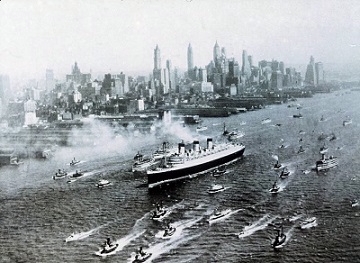
First Arrival in New York
June 1st, 1936
It would take precisely 4 days, 12 hours and 24 minutes for The Queen Mary’s maiden voyage to be concluded. Her arrival is one of the most celebrated in the history of New York, receiving the kind of reception and fanfare that only New York could generate. The harbour was filled with an awaiting armada of boats and fire tugs, with their water spouts spraying large fountains of water into the air. Thousands of well-wishers lined the shore, all hoping to catch sight of her auspicious arrival. Her maiden voyage had a total compliment of 1,849 passengers and 1,186 officers and crew, and thus she safely carried 3,035 souls across the Atlantic on her first voyage. |
|
Cunard's Flagship Makes Her Mark
1936-1939
During 1936 to 1939, Queen Mary enjoyed great popularity as the flagship of the great Cunard White Star Line. At her launch in 1934, King George V dubbed her as the “Stateliest ship afloat.” However, many testified that life aboard the newest and fastest North Atlantic liner was anything but staid, for it was well known that her five bars located on Promenade Deck alone were filled with revellers most of the day and night. Evenings were very much a gala affair for the first class passengers. With the parade of gowns, jewels and men in the finest of formal attire, it was said that the First Class passengers (or "Cabin Class", as it was eventually called) looked as if they were dressed for an event at Buckingham Palace. Second Class (known as "Tourist Class") was equally well presented, whilst Third class (or "Steerage") had a more casual atmosphere. However, no matter the class, for each passenger on a voyage on the Queen Mary, it was an event! (It should be noted that during Queen Mary's career, Cunard changed the names on the classes of service. At one point, First Class was only known as "First Class", with Second Class being called "Cabin Class" and Third Class being called "Tourist Class", perhaps in an attempt to make "Steerage" seem less dismal. So technically, the correct names for the class levels all depends on which years are being referred to.) |

|
The Fastest Ship on the Seas
The Fight for the Blue Riband
In August 1936, Queen Mary captured the much coveted “Blue Riband” (the award given to the ocean liner with the fastest transatlantic crossing during regular service), from the French Liner “Normandie”, with average speeds of 30.14 knots westbound and 30.63 knots eastbound. (That is roughly 34 miles per hour.) In 1937, the Normandie was fitted with a new set of propellers and reclaimed the Blue Riband. But in 1938, Queen Mary again prevailed, with speeds of over 31 knots, and held the record until 1952. (Losing it finally to the S.S. United States, which, out of fairness to the Queen Mary, was partially constructed by the C.I.A. as the fastest ship in the world, in anticipation of having her serve the military, should another World War break out. I’m sorry to report that the S.S. United States has not fared as well as the Queen Mary, as she sits in Philadelphia, emptied of her grand interiors, slowly rusting away, hoping that someone will finally rescue her and restore her.) |

|
World War II Breaks Out
A Queen at War
On August 30, 1939, the Queen Mary departed Southampton, sailing via Cherbourg, France, bound for New York. Little did anyone aboard know that this would be the great Queen’s last peacetime voyage, for the very next day the Nazis invaded Poland. On the 31st the captain was informed that for security reasons he was to run a zigzag course across the Atlantic and operate under blackout conditions in order to elude German submarines. Amongst the celebrities on board were Bob and Delores Hope, who was travelling solely as a passenger, and was not on board as an entertainer. It is said that that he continuously made light, even fun of the situation, and that it was not well received, especially by the British passengers. Most passengers were very apprehensive for the next four nights as all exterior lights were extinguished, lookouts were posted around the ship, and the helmsman continually steered a zigzag course, making the ship a difficult target for a torpedo. After four worrying nights, her passengers finally arrived safely in New York on Monday, September 4, whereupon all further crossings were cancelled, and the Queen Mary was put on mothballs for the next 6 months, as decisions were made about how she could best serve the war effort. Joining her in mothballs on New York's once bustling West Side Piers, were her running mate, the Queen Elizabeth, her chief rival, the Normandie and her older sister, the Mauretania. |

|
The Grey Ghost
A New Era for The Queen Mary
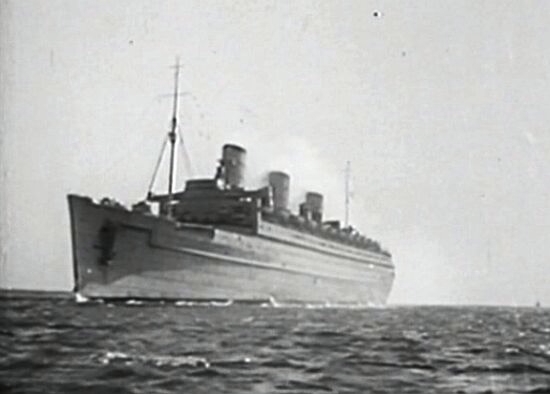
In anticipation of being pressed into service, the exterior of the Queen Mary (along with the Queen Elizabeth and the Normandie) was fully repainted with a dull grey paint, which would serve to camouflage her from enemy ships, U-boats and submarines. Because of her speed and her coat of grey paint, she earned the wartime nickname of “the Grey Ghost”. And the "Grey Ghost" would serve so well that she would become one of Hitler's primary wartime targets. |

|
Queen Mary joins the War Effort
The Journey Begins...
On March 1, 1940, official orders came from the Admiralty, calling for the Queen Mary to sail for Sydney Australia where she would be refitted for war duties. Ten days later on March 21, 1940, Queen Mary departed Hudson Pier New York, steamed south to South America, and then across the Atlantic to South Africa. She refuelled and took on supplies in Cape Town, then steamed at a speed of 28 knots across the Indian Ocean to Sydney. Upon arrival, she was handed over to the Cockatoo Docks & Engineering Company where she was converted for her new role as a troop ship. |
|
Conversion to Troop Ship
Her first refit...
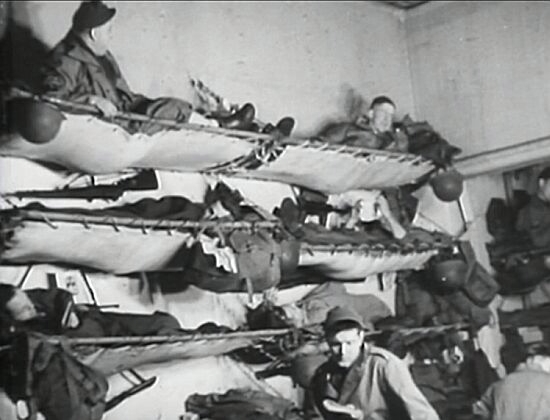
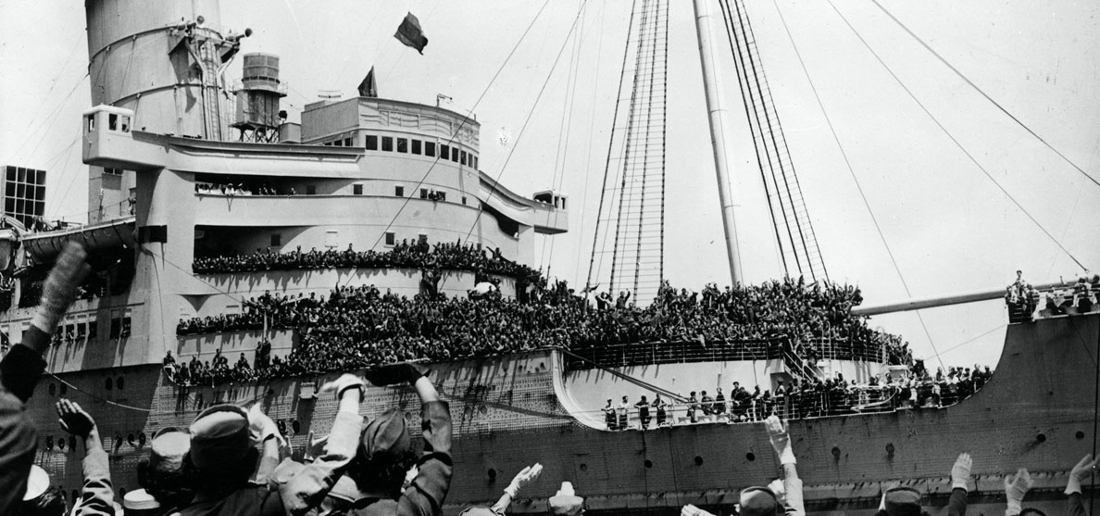
Upon her arrival in Sydney, her luxurious furnishings were all removed, and the conversion to “Troop Ship” began. To protect against magnetic mines, a degaussing coil was fitted around the outside of the hull. Inside, stateroom furniture and decoration were removed and replaced with triple-tiered wooden bunks (which were later replaced by standee bunks). Six miles of carpet, 220 cases of china, crystal and silver service, tapestries and paintings were removed and stored in warehouses for the duration of the war. The woodwork in the staterooms, the first-class dining room and other public areas was covered with leather. Every usable inch of the ship was put to use in some way to accommodate the large numbers of troops that she would transport. Even the large grand staircases were fitted with tiers of bunk beds. Queen Mary and Queen Elizabeth were the largest and fastest troopships involved in the war, often carrying as many as 15,000 men in a single voyage, and often travelling out of convoy and without escort. Their high speed made it difficult for U-boats to catch them. For protection, a number of small calibre guns were fitted, however, as it is said, her main protection was her impressive speed. |

|
Record Numbers of Soldiers
On May 4, 1940, she left for the Clyde with over 5,000 troops of the Australian Imperial Force on board, arriving on June 16. Thereafter she headed for Singapore carrying troops, due to the Japanese threat of the region. After an overhaul in Singapore, she returned to Sydney after which she commenced her five-year long trooping duties, during which time she transported over 800,000 troops. |

|
A Tragic Accident
The Cause of Supernatural Activity?
On October 2nd, 1942, Queen Mary accidentally sank one of her escort ships, slicing through the light cruiser HMS Curacoa off the Irish coast with a loss of 239 lives. Queen Mary was carrying thousands of Americans of the 29th Infantry Division, to join the Allied forces in Europe. Due to the risk of U-boat attacks, Queen Mary was under orders not to stop under any circumstances, and steamed onward with a fractured stern. Some sources claim that hours later, the convoy's lead escort returned to rescue 99 survivors of the Curacoa's crew of 338, including her captain John W. Boutwood. This claim, however, is contradicted by the liner's then Staff Captain (and later Cunard Commodore) Harry Grattidge, who records that Queen Mary's Captain immediately ordered the accompanying destroyers to look for survivors within moments of the Curacoa's sinking. There are reports of ghost sightings down in the forward engine rooms, that are attributed to the spirits of sailors who lost their lives during this tragic accident. That section of the ship is one of the many places that is said to be haunted on the Queen Mary, and there are various tours available to take you down to such locations, where you can decide for yourself if she’s indeed haunted or not. |

|
Queen Mary and "The Poseidon Adventure"
Not just a movie...
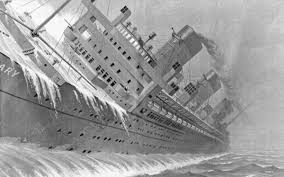
In December 1942, Queen Mary was carrying 16,082 American soldiers from New York to Great Britain, a standing record for the most passengers ever transported on one vessel. During this trip, while 700 miles from Scotland during a gale, she was suddenly hit broadside by a rogue wave that reached a height of 92 feet (28 metres). An account of this crossing can be found in Walter Ford Carter's book, No Greater Sacrifice, No Greater Love. Carter's father, Dr. Norval Carter, part of the 110th Station Hospital on board at the time, wrote that at one point the Queen Mary "damned near capsized... One moment the top deck was at its usual height and then, swoom! Down, over, and forward she would pitch." It was calculated later that the ship rolled 52 degrees, and would have capsized had she rolled another 3 degrees. The incident inspired Paul Gallico to write his story, The Poseidon Adventure, which was later made into a film by the same name, for which the Queen Mary herself was used as a filming location, depicting several locations within the fictional S.S. Poseidon. Fans of the film will, no doubt, recognize several locations on board that were used during the filming. |
|
The War Ends
Queen Mary Earns Her Place in History
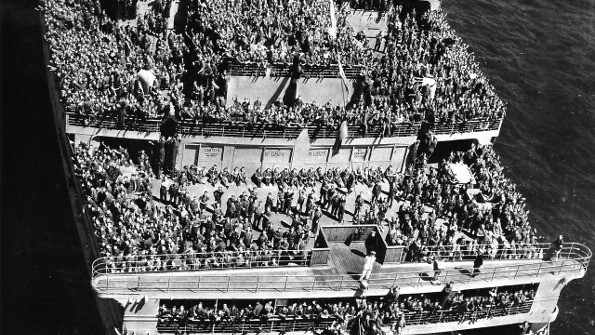
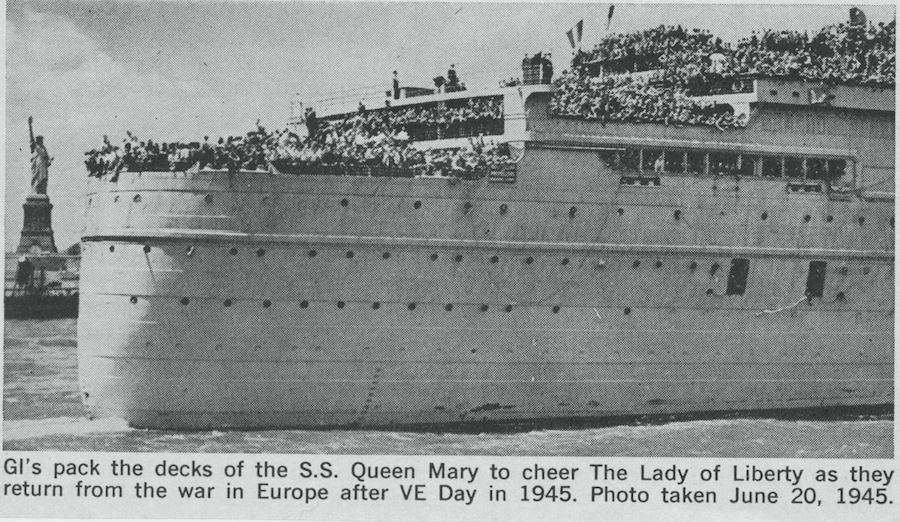
Queen Mary’s contribution to the war effort cannot be exaggerated. She was responsible for transporting over 800,00 troops, and was instrumental in getting more American soldiers to Europe than any other ship. She was also responsible for transporting countless numbers of war prisoners back to containment camps in the United States, thereby avoiding any chance of those captured soldiers returning to serve in Hitler's military. She was such a threat to Hitler, that he put a bounty on her head: $250,000 and the coveted “Iron Cross” to any u-Boat captain that could effectively sink her. That is close to $4 million dollars in today’s economy. Winston Churchill said that the Queen Mary was responsible for helping to end the war a year earlier than it would have without her. And it was to the Queen Mary that he entrusted his own safety when needing to travel outside of Great Britain during the war. He crossed the Atlantic on her multiple times, for meetings with fellow Allied forces officials, always under the name of “Colonel Warden”, and insisted that the lifeboat assigned to him would be fitted with a .303 machine gun so that he could “resist capture at all costs”. |

|
Winston Churchill on board the Queen Mary
|


|
The Return of the Queens
The Cunard Colors Are Seen Once Again...
After the war, the Queen Mary continued her wartime duties, by transporting countless European "war brides" back to their American husbands in the U.S. Then, from September 1946 to July 1947, Queen Mary was refitted for passenger service, adding air conditioning and upgrading her berth configuration to 711 first class, 707 cabin class and 577 tourist class passengers. The first sign that the former "Grand Lady of the Seas" was once again going to be luxrious passenger liner, was the repainting of the funnels in the legendary "Cunard Red" color that had been missing for so many years. The Queen Elizabeth was also returned to the trademark paint job of black, white and Cunard Red, and the two sisters of the ocean were once again back in service to the casual traveler looking for elegance and efficiency. |

|
The Most Profitable Ships on the Ocean
The Cunard Queens are Unsurpassed...
The two Queens were the most successful and profitable ships in the history of the North Atlantic. Both departed Southampton and New York with a full complement of passengers during the late 1940's and 1950’s. Passengers had to book many months in advance in order to guarantee a passage aboard one of the Queen’s, with many passengers taking one liner one way, and the other one back home again. Regular passengers had favorite state rooms, and the list of celebrity passengers was a veritable Who's Who of Hollywood and European Royalty. |

|
Hollywood's Favorite Ship
Anyone who was anyone traveled on her...
|

|
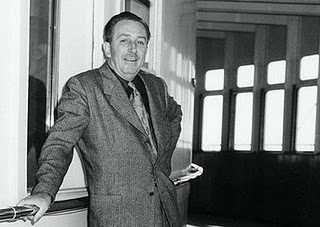
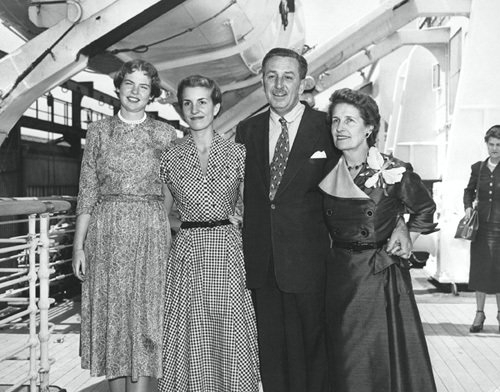
Walt Disney
Usually travelling with his wife and two daughters, Walt Disney was a regular passenger on the Queen Mary. |
|
Elizabeth Taylor
With her husbands and dogs...
Elizabeth Taylor very famously sailed on the Queen Mary as she and her new husband, Conrad Hilton, departed New York for their European honeymoon. Along with her new husband, she was sure to also travel with her favorite dog, as Cunard prides themselves on having excellent and luxurious kennel's on board - even to this day! The following pictures of Elizabeth Taylor were all taken on board the Queen Mary. |


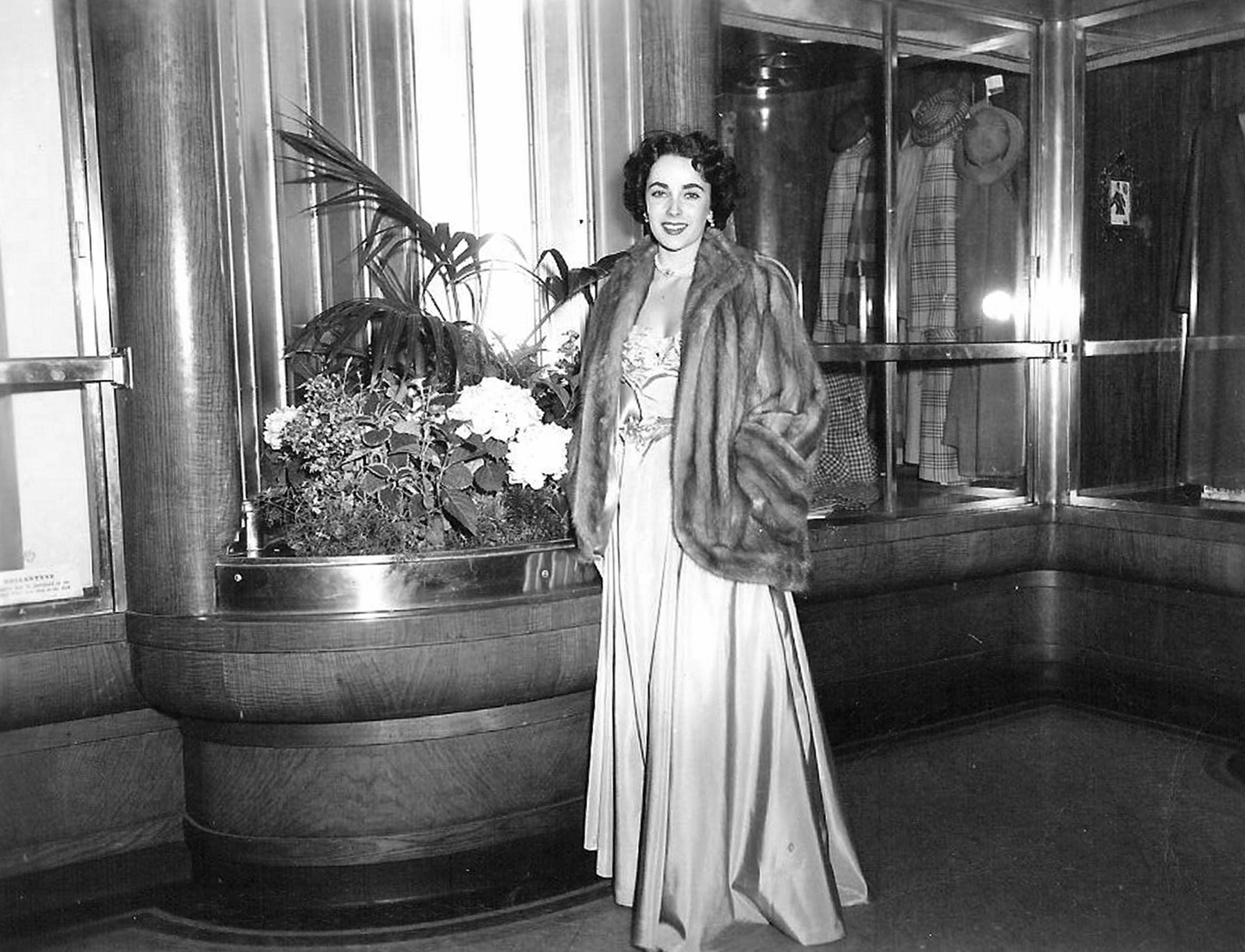
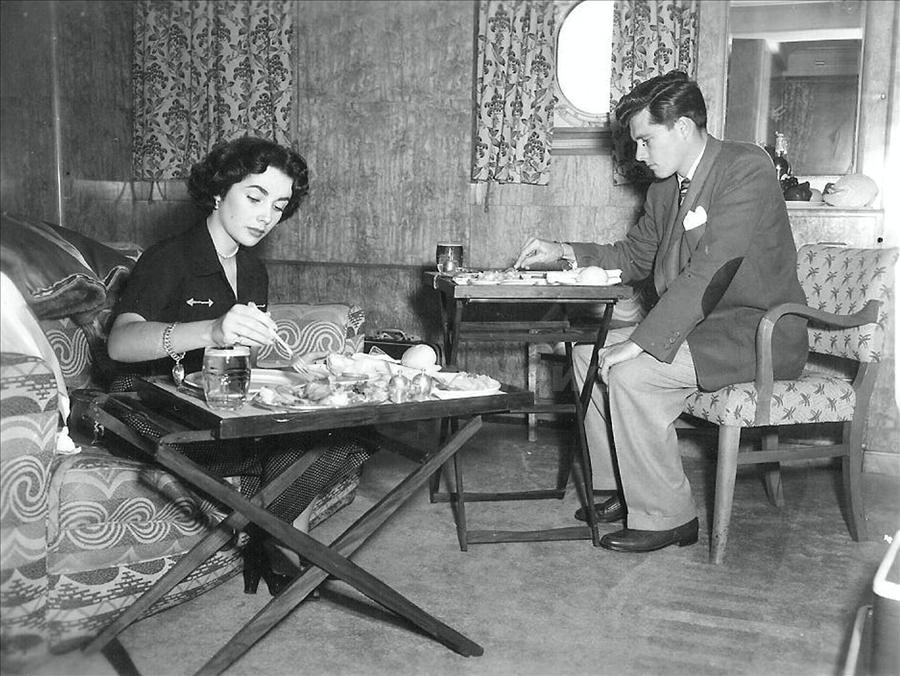

|
Elizabeth Taylor and Conrad Hilton enjoying dinner at the Verandah Grill on board the Queen Mary. |
|
Marlene Dietrich
On Board the Queen Mary
|

|
Duke and Duchess of Windsor
A British King and his American Mistress
For those that remember their British Royal history, upon the death of King George V, his eldest son, Edward VIII, ascended the throne. There was a small problem: he was in love with an American divorcee, Wallis Simpson. Of course, that would not be a suitable candidate for the wife of a King of England, so he was faced with a choice: the throne or the love of his life. He chose love, and abdicated the throne, which then passed to his younger brother, Albert (affectionately known as "Bertie"). Bertie would then be crowned King George VI. For those that enjoyed the film "the King's Speech", George VI/"Bertie" is the subject of that award wining film. So, Edward VIII, gave up his title, and was instead given the title of Duke of Windsor. He would eventually marry Wallace Simpson (a ceremony that all members of the Royal Family were forbidden to attend). Assuming he would live out a year or two in exile before returning again to England, he instead found that his brother (with the approval of his mother, Queen Mary) would forbid him to again enter the United Kingdom without a formal invitation. The cost of breaking that condition would be the end of his financial support as a member of the Royal Family, so he had no choice but to comply. So the Duke and Duchess proceeded to spend many years traveling the world. And their favorite ship was, of course, the Queen Mary (named for his very own Mother). They always chose the same suite whilst on board, and it was eventually renamed "the Windsor Suite" in honor of the couple. The following pictures were taken of the Royal Couple whilst on the Queen Mary. |

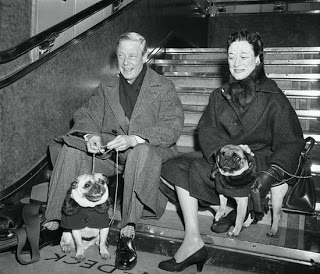
|
Cary Grant
Taken on Board the Queen Mary
|

|
Alfred Hitchcock
Alfred Hitchcock actually began his illustrious Hollywood film career by traveling to America on board the Queen Mary. He and his wife would travel on board the ship many times over the years, as they visited their native country, England. Henry's father has a personal story of running into Hitchcock in an elevator on board the Queen Mary during a crossing in the 1950's. Henry's father was a teenager at the time, and was, at first impressed with his elevator companion, but then a young girl entered the elevator on a subsequent floor. She was clearly thrilled to see the legendary director in person and asked him for an autograph, but instead of complying graciously, Henry's father reports that Hitchcock looked down his nose at the young girl and simply said "I'm not Mr. Hitchcock!" To this day, Henry's father remembers how put off he was by the director's behavior. Recent films and books about Hitchcock have done much to back up Henry's father's personal impression of the man. Although Henry remembers his Grandmother, Eleanor, telling him stories of socializing with the Hitchcock's during that crossing and rather liking them. Regardless of the stories of the man's behavior, Henry is thrilled to have this one degree of separation from this legendary master of cinema. |

|
Errol Flyn
The Legendary Swashbuckler Also Sailed...
This is a picture of Errol Flynn taken on board the Queen Mary during one of his many crossings. |

|
Gary Cooper
This picture was taken of the much loved film actor, Gary Cooper, on board the Queen Mary at one of the staircases leading from the enclosed Promenade Deck up to the Sun Deck. These stairs are quite easy to spot whilst on board the ship. |
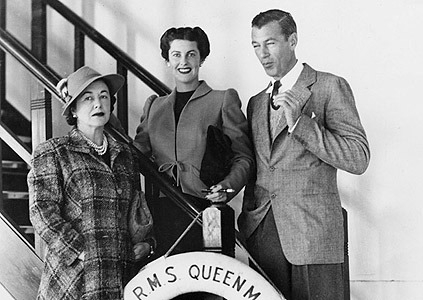
|
Fred Astaire
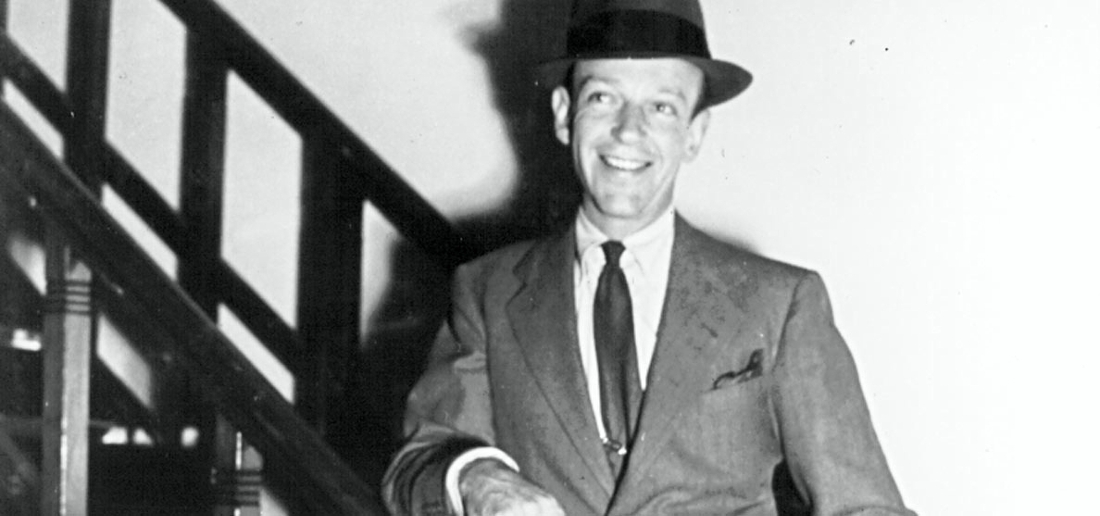
Fred Astaire traveled frequently on board the Queen Mary as well, often to visit his sister, Adele, who, after retiring as Fred's first dance partner, married the son of a Duke, and moved to Ireland where she resided at Lismore Castle. Fred and his family traveled often to visit his sister and her family. The picture below was also taken on one of the wooden stairways that connected the Promenade Deck and the Sun Deck. A large version of this picture can be seen on board today, right next to where it was actually taken. |
|
Bob Hope
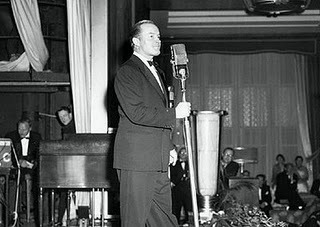
Bob Hope is seen here, entertaining audiences on board the Queen Mary in the First Class Ballroom (now known as The Queen's Salon). This room is just off of the enclosed Promenade Deck and can be visited during one of the many tours offered on board. |
|
Robert Montgomery, Loretta Young and Bob Hope
Pictured up on the Sun Deck of the Queen Mary |

|
Clark Cable
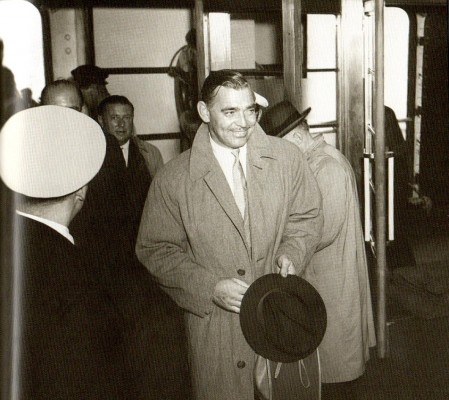
Clark Gable being welcomed on board the Queen Mary. |
|
Burt Lancaster
In the First Class Smoking Room
|

|
Jacqueline Kennedy and Robert Kennedy
On Board the Queen Mary
|

|
The Luxurious Surroundings Abounded
The Only Way to Travel
This was not just simply a ship that transported people across the ocean, this was an experience unrivaled by any other. The food was world class, the accommodations were five star, and the service was impeccable. People would often say that their favorite part of a European (or American) vacation was the time spent traveling there on the Cunard ships. Before we move on to the last chapter of her story, and her permanent transfer to Long Beach, California, we'd like to share with you some vintage pictures taken of the Queen Mary during her "Golden Age" of transatlantic crossings. |

|
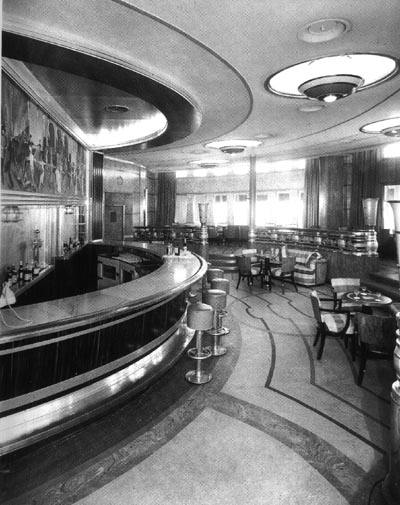
Observation Bar Cocktail Lounge
Located on the front of the ship, with sweeping views over the bow of the ship, while riding and cresting the waves on the high seas, the views from here would have been incredibly dramatic. |


|
First Class Swimming Pool
Now said to be one of the "haunted locations" on the ship (apparently occupied by a sweet little girl ghost who often looks to be comforted by those who have seen or heard her), the First Class Swimming Pool was the height of luxury when crossing the Atlantic. It spans two decks in it's height, and featured a slide and ample area for guests to relax in between swims. It is no longer in use, but instead used as a location for the various historical and ghost tours that are offered on board the ship. Sadly, there were structural issues with the weight of the water in the pool that were threatening decks below the pool, and the decision was made to permanently drain the pool and take it out of commission, except for the tours. You will be able to see the entrance to the First Class Pool in the lobby just outside the Grand Salon ballroom where our dinner reception will be taking place. Please let us know if you happen to see the lonely little girl ghost, as we'll be happy to set a place for her at your table. |

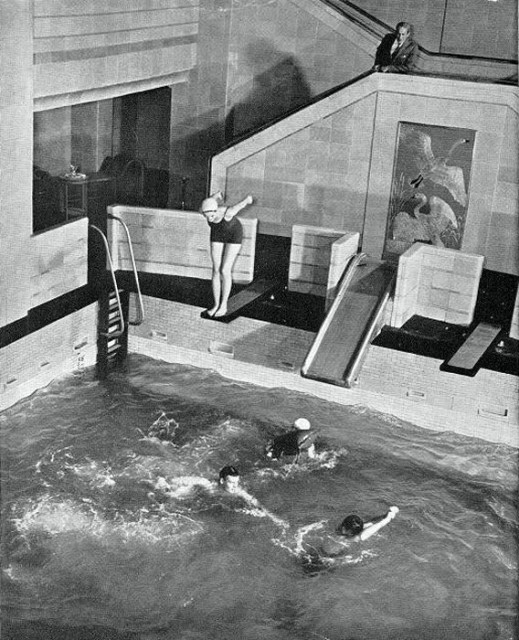
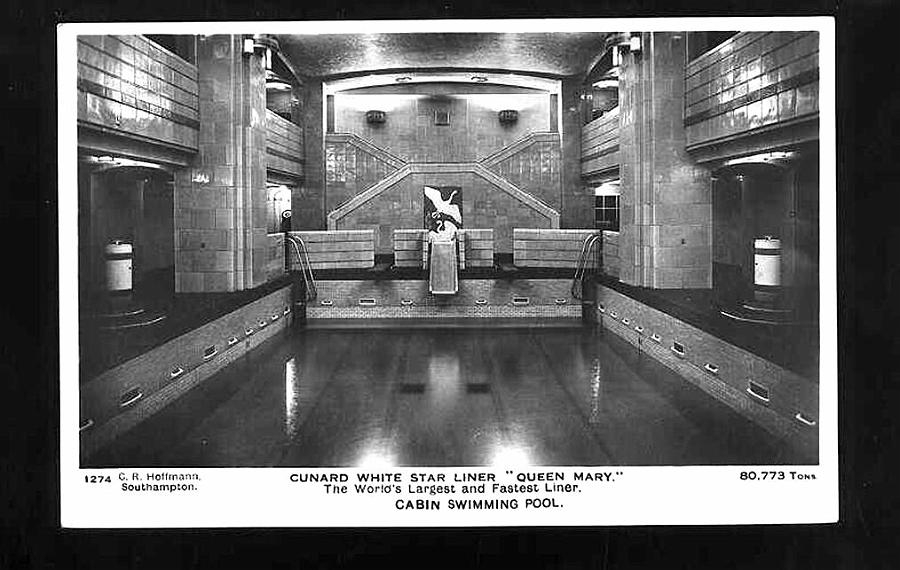


|
Piccadilly Circus
Named after the famed section of London's Theatre District, Piccadilly Circus on the Queen Mary was the location of all of the specialty stores, where passengers could purchase current newspapers (printed on board), tobacco products, clothing, jewelry and various souvenir items. Located in the center forward part of the Promenade Deck, this was often a meeting place for passengers, as many of the popular locations on board could be reached from this area (The Observation Bar, the Ballroom, the First Class Smoking Room, etc.). Today, Piccadilly Circus is still a center of shopping on the ship, offering everything from genuine and tasteful souvenirs, all the way to the expected "less than tasteful" t-shirts and various other items that bring the ship a profit. As we love the Queen Mary so much, we've resolved ourselves to knowing that even the sale of touristy merchandise means profit for this very special ship - and profit means she continues to survive. |

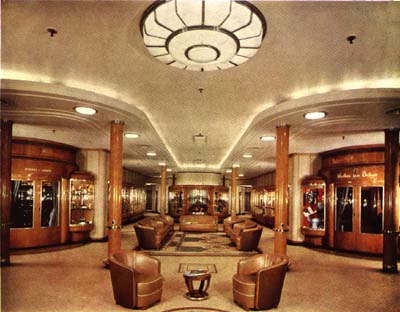
|
First Class Sitting Room/Ballroom
Located off the Promenade Deck (very close to Piccadilly Circus) is the First Class Sitting room. You'll see from these pictures that there is a stage at one end of the room. The stage would be used by various lecturers, etc., during the day. But at night, the furniture would all be moved back, and a big band would take the stage, and First Class passengers would dance the night away in this very beautiful room. With the room being adjacent to the enclosed Promenade Deck, the ladies in their gowns and men in their tuxedos, could step out and get some air without being completely exposed to the elements. |


|
The following picture is also of the First Class Sitting Room/Ballroom, but taken from the opposite side of the room. At the end of the room, you'll notice a tall light colored wall directly in the center. That is the extended mantlepiece of one of the room's three fireplaces. At the top of that panel, are hidden several smaller panels that would open to allow film projectors to project films on to a screen that would be lowered on the stage, thus giving the First Class passengers the ability to watch Hollywood films whilst crossing the Atlantic. |


|
First Class Dining Room
The Grand Salon
This was the largest room ever built on any ocean liner, and would accommodate the dining needs of the First Class passengers. Service here was impeccable, and it was here that the finest of "White Star" service would have been at it's best. This is the room where the famous "Map of the Atlantic" was, and where passengers could watch minature crystal versions of their ship (and the sister ship, the Queen Elizabeth), cross the Atlantic in real time. Also in this room are stunning murals and tapestries, historic wood carved and crystal friezes, all depicting the history of travel and mythological water creatures. And since the room spans the entire width of the ship, there are even numerous portholes on either side that provide for beautiful views of the passing ocean. The room is so huge, as a matter of fact, that when the ship was moved to Long Beach as a hotel, the room was broken up into the larger Grand Salon (which can seat 800), and a smaller "Windsor Salon"; this was achieved by the inclusion of partitions that can (thankfully) be removed to recreate the full space when it's needed. As concerning as it is when a new owner chooses to break up a famed room into two separate spaces, in the case of the Windsor Salon, it was originally an annexed section of the First Class Dining Room. That particular section had lower ceilings and no portholes, so we are happy to report that the grandeur of the three story ceilings of the original First Class Dining Room are still all intact in the Grand Salon, and it still retains as breathtaking in appearance as when the First Class diners would come into dinner, dressed in their gowns and tuxedos. This is our favorite room on the ship, and so it's the room we chose for having our dinner reception; and the lovely people at the Queen Mary have given us the Windsor Salon in addition to the Grand Salon! So for our event, we'll have the entirety of the original First Class Dining Room. We are still not certain how we'll use the section now called the Windsor Salon, but we'll come up with something clever... and as our guest, you'll get to see just how enormous the entire First Class dining room originally was. |
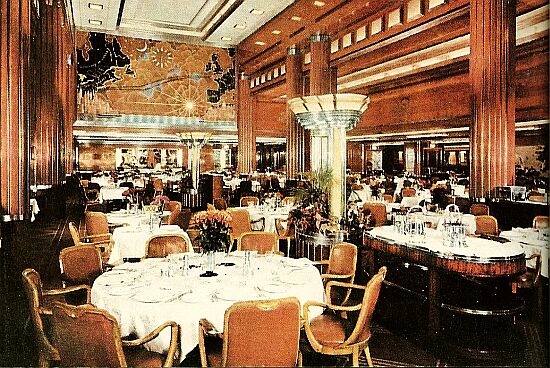
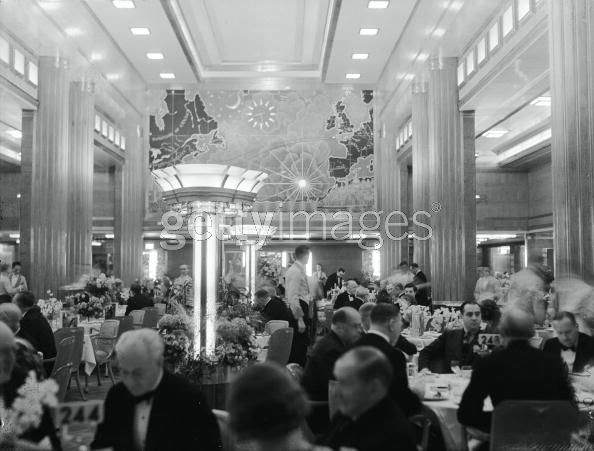


|
Verandah Grill
1st Class Specialty Dining
For First Class Passengers who wanted something a little different, there was the Verandah Grill, on the back of the ship, with panaromic views of the oceans behind. The artists that designed the Verandah Grill included a circus and music motif, so the room has a very whimsical feel to it. This is where we'll be having our Rehearsal Dinner for those in the wedding party, but then opening it up after the dinner to ALL of our guests as we host our joint Bachelor Party. |

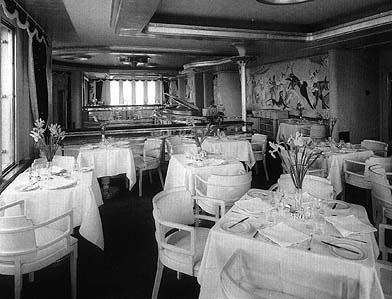
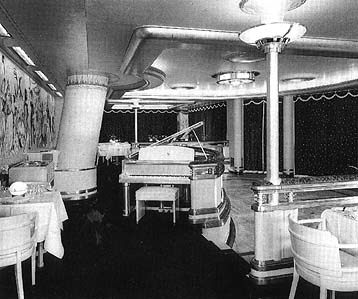
|
First Class Smoking Room
|

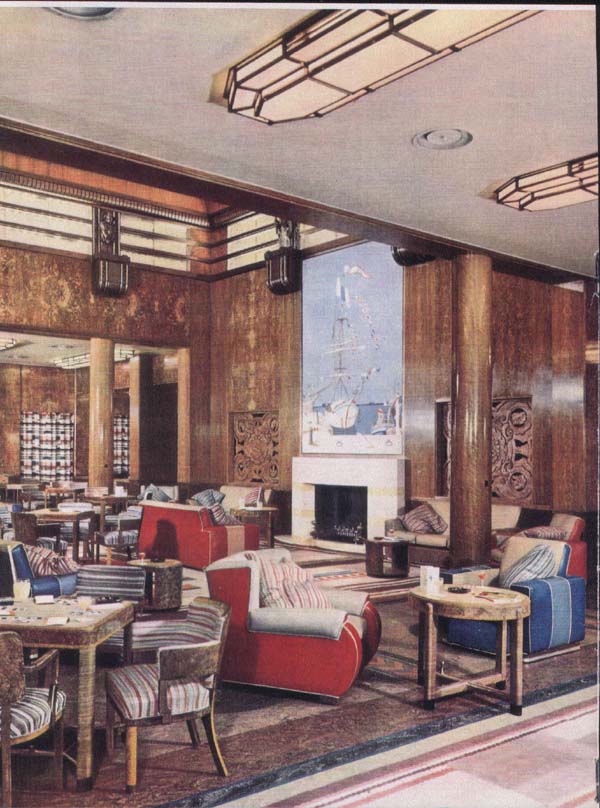
|
First Class Suite
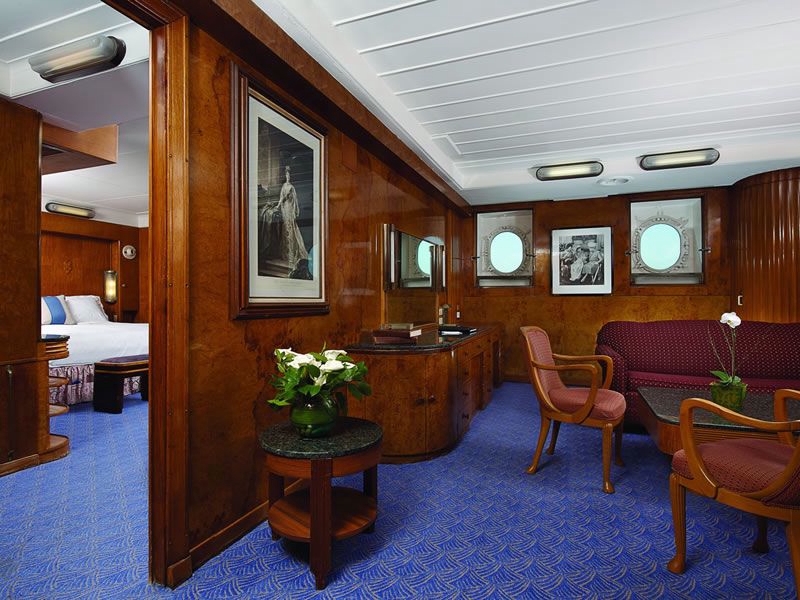
Each First Class Suite consisted of an entrance foyer (with a closet large enough to store several steamer trunks), a full living room (with fireplace, writing desk and ample storage), a full bedroom with multiple large closets and full dressing table, two full baths (each offering hot and cold fresh and salt water), a separate maid's room (that also had an exit door to the hallway, so the maid could come and go without disturbing their employer), and several portholes offering beautiful views of the ocean. As there are only 8 of these full suites on board, anyone who stays in a full suite is sure to be sleeping where countless celebrities, dignitaries and even royalty have slept before. It is said that in the Churchill Suite (occupied by Winston Churchill during his trips on board the Queen Mary during WWII), had one of his bathtubs filled with sand, so that he and has his advisors could actually plan the D Day invasion. So, if you're lucky enough to stay in the Churchill Suite, you'll know that the history literally played out there in your bathrub. The Windsor Suite is named, of course, for the Duke and Duchess of Windsor (former King Edward), and that is the room they occupied whenever they sailed. So anyone getting that suite will know that they're sleeping in a room that was truly "fit for a King". The pictures below are all vintage shots of various suites. As you can tell, the decor changed throughout the years. The final picture is the Queen Mary Suite, and how it appears today. |


|
Second Class Lounge
"Tourist Class"
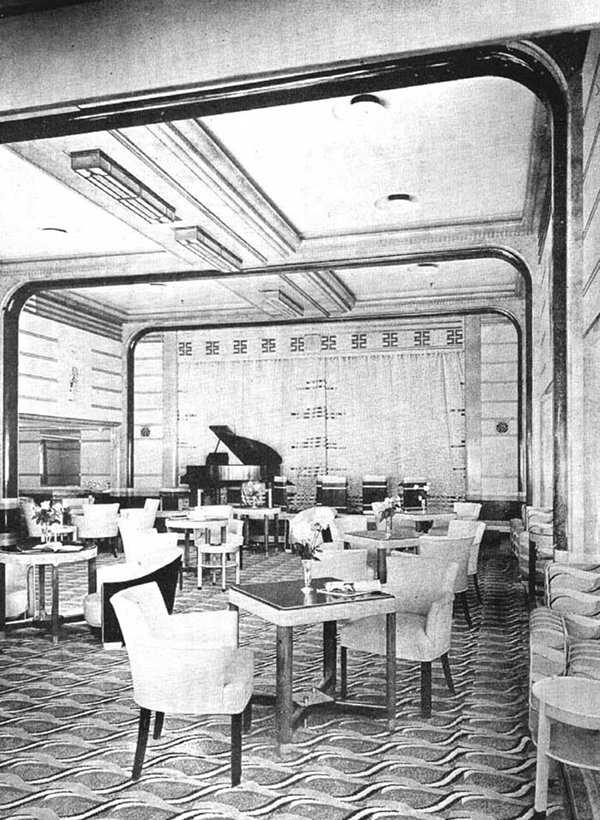
Cunard White Star was not just known for it's luxuriuos First Class accommodations. It's Second Class, called "Tourist Class" also was quite sumptuously decorated. The ceilings may not have been as high as First class, the rooms may not have had the same grandeur as the First Class (or "Cabin Class" as they began to call it), but it was still a far cry from what the Steerage Passengers in Third Class were experiencing. This vintage picture of the Second Class sitting room and lounge shows just how comfortable it was to travel in this class of service on board the Queen Mary. |


|
Second Class Dining Room
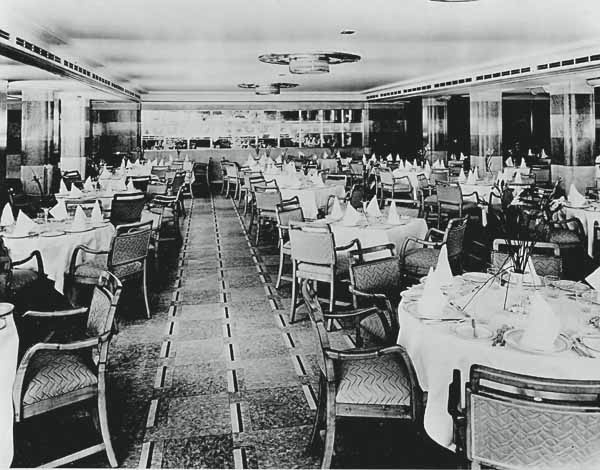
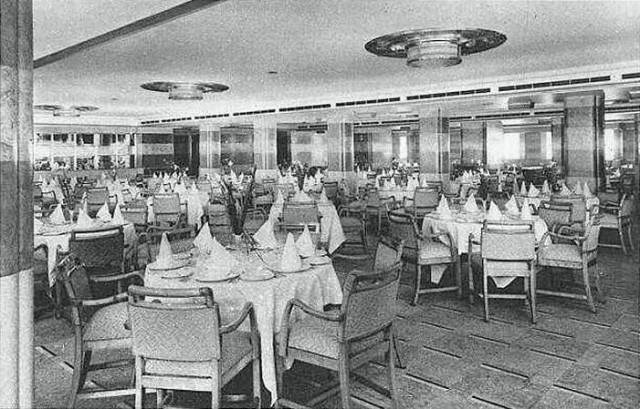
While not to the scale of the First Class Dining Room, the Second Class Dining Room had beautiful etched glass walls and very comfortable seating. The food was also known to be quite good, and would probably be better than most cruise lines would serve to their top paying passengers today. |
|
Second Class Smoking Room
|

|
Second Class Cabin
Far Better Than Most Cruise Ships of Today
As a Second Class passenger, your room would have been quite comfortable and bit more spacious than most cruise passengers experience on today's ships. |

|
Third Class Stairway
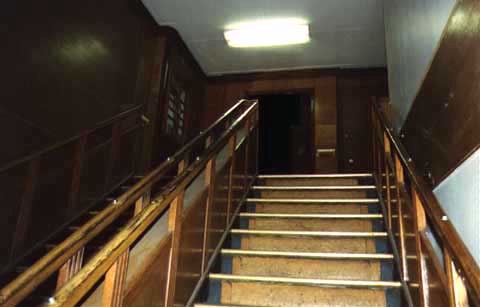
In one of the very few examples left on the ship of life in the Third Class, or Steerage, accommodations, the Third Class stairways still exist at the very front of the ship, and are still available to be used by guests getting down to staterooms located in the front of the ship. Of course, none of the Third Class staterooms are still intact, and all have instead been combined with other rooms to create much nicer and comfortable accommodations. In the days that the Queen Mary was sailing, all Third Class accommodations and amenities would have been located at the front of ship, as that is generally considered the least comfortable place to be on rough seas. First Class would have been located mid-ship, as the most stable place during rough seas, with Second Class being located at the rear of the ship, which would have been a bit more comfortable than the front during rough seas. You can see by this picture, how simple and plain the Third Class stairways were. |
|
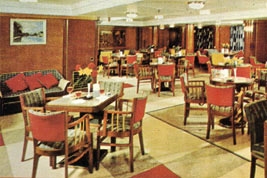
Third Class Smoking Room
|
|
Third Class Lounge
|


|
Third Class Dining Room
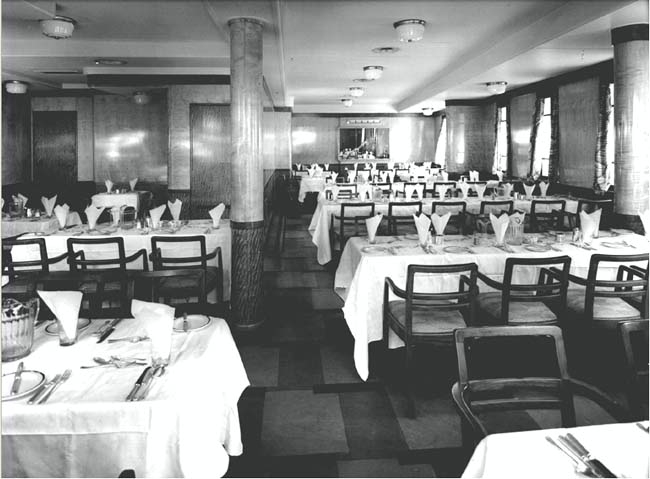
All in all, really not a bad looking dining room for the Third Class passengers. A modern New York City restaurant could duplicate this exact decor and still be considered elegant dining if the food and the location is good enough. |

|
Third Class (Steerage) Cabin
None of these cabins exist anymore, with the exception of one left intact as part of the museum section of the ship. It wasn't luxurious to travel Steerage, but certainly more comfortable than on other ships. |

|
The Grand Lady Slows Down
The Jetliner Delivers a Fatal Blow to Ocean Travel
In 1958, the first transatlantic flight by a jet began a completely new era for the Cunard Queens. No longer were travelers between Europe and America required to travel by Ocean Liner. With the advent of the transatlantic jet, the trip could be completed in a matter of hours, instead of a matter of days. The world economy was changing as well, and the average traveler could no longer afford as much time away from work as was required by visiting Europe (or America) by ocean liner. The U.S. government had also made it more difficult for foreigners to emigrate to the United States, and so the era of the 3rd Class immigrant had also passed. Sadly, no longer were the elegant Ocean Liners the financial boon that they once were. By the 1960's, especially during winter voyages, the Queen Mary was often sailing into harbour with more crew than passengers. Both the Queen Elizabeth and the Queen Mary were still able to average over 1000 passengers per crossing, but the era of profitability was now gone, and by 1965 the entire Cunard fleet was operating at a loss. The picture below is the plane that started the decline of the Ocean Liner: Lufthansa's Focke-Wulf FW 200 B Condor, shown landing here at Floyd Bennet Field in New York after it's first success transatlantic passenger flight. |

|
Queen Mary Says Goodbye to Southampton
The End of an Era...
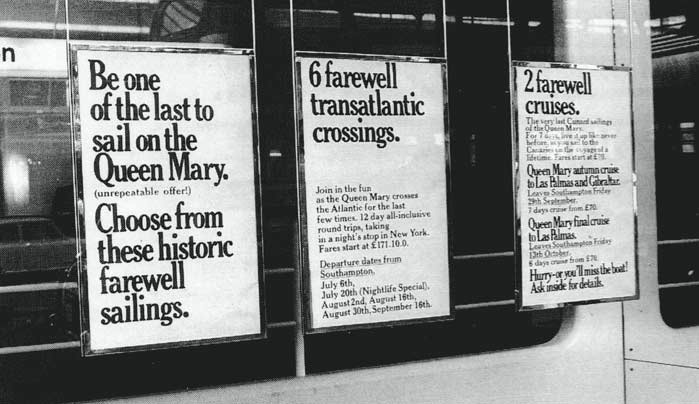
As the Cunard corporation was facing great economic loss by the mid-60's, the writing was on the wall: The era of the grand Ocean Liners was indeed over. Air flight had taken over the majority of the tourist market, and the public's interest in traveling the ocean in luxury had tragically waned. Cunard was in the process of building a new ship, the Queen Elizabeth 2 (which would come to be known as the famed QE2), and to pay for her construction, they mortgaged the rest of the fleet. The QE2 was smaller than her older sisters and could still provide some transatlantic service, but could also travel the world, visiting some of the smaller ports of call, thus beginning a era for ocean travel: cruising. But in this new market of "cruising" that was starting to gain some momentum, the public was not interested in the grand old ships. They were too big, too old fashioned, and couldn't travel to ports that would provide "resort-type" travel experiences. Cunard finally made the decision that the time had come to retire both the Queen Mary and the Queen Elizabeth from service, and sell them off to the highest bidder. The Queen Elizabeth met with a tragic end. Her post-Cunard life saw her privately owned, then a failed attempt at being a floating hotel (in the Florida Everglades), and finally converted into an Asian-based floating University. But sadly, she caught fire (some suspect arson), and sunk off the coast of Hong Kong, and was eventually sold to scrap. The Queen Mary, on the other hand, just barely avoided being turned to scrap. The Japanese scrap merchants that bid on her, came in just below a bid from the City of Long Beach, California. The city had plans to turn the Queen Mary into a grand tourist attraction and a city icon. The result would be the “Hotel Queen Mary,” convention and entertainment center and museum. As the Queen Mary was loved by millions around the world, the new owners hoped that she would become responsible for placing the City of Long Beach on the world map. The final price that the City of Long Beach paid for the legendary Queen Mary was $3.45 million. She arrived in Southampton for the last time on September 27, 1967, having just completed her 1000th Atlantic crossing. In her years of service, she had carried 2,112,000 passengers over 3,792,227 miles. And On October 31, 1967, 1,093 passengers and 806 crew set out on her last ever ocean voyage, which would take her on an epic journey around Cape Horn, and arrive in Long Beach on December 9th. |

|
|
|
A New Home for the Grand Lady of the Seas
And a Welcome Befitting of a Grand Queen
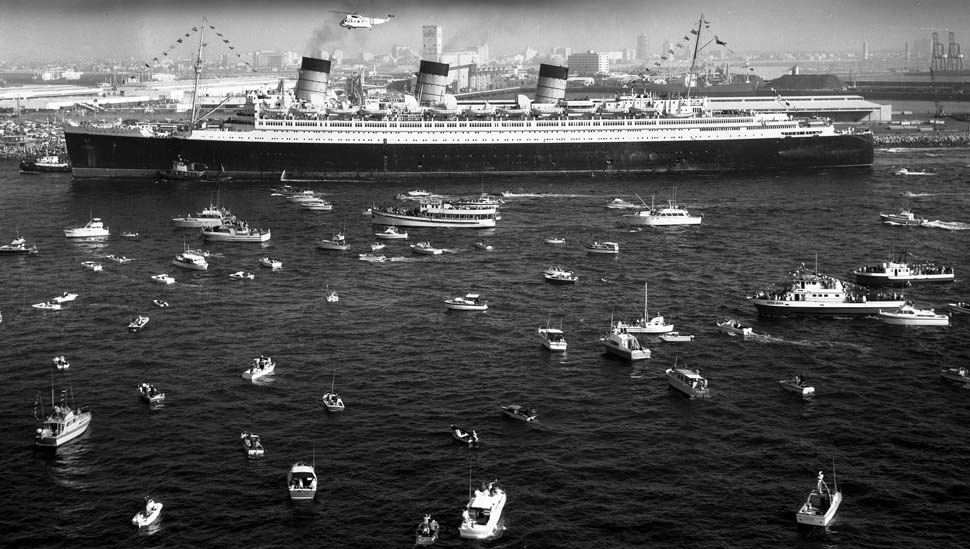
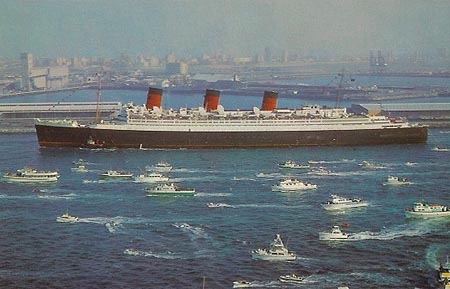
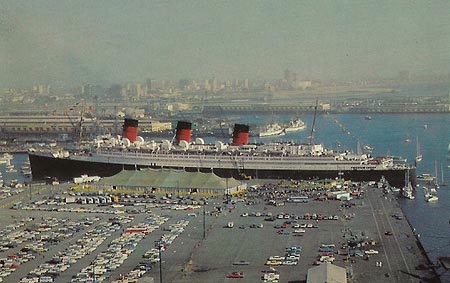
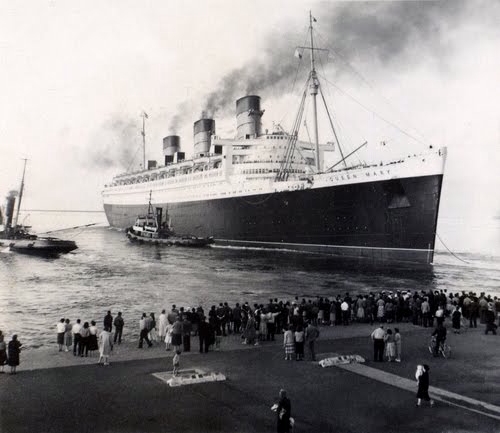
On December 9th, 1967, the Queen Mary arrived in Long Beach, California to much fanfare and celebration, following a 39-day voyage from England. The image below, of the auspicious arrival in Long Beach, ran the full width — and above the masthead — of the Los Angeles Times front page, with a story by staff writer Harry Trimborn, who reported:
The Queen Mary arrived Saturday at her permanent residence in exile amid a tumultuous welcome that was bigger than any celebration in Southern California since the day World War ll ended 22 years ago…. Tens of thousands – perhaps a million or more — on land, sea and in the air greeted the Queen as she glided along the coast and past the Long Beach Harbor breakwater at 10 a.m. on the last mile or so of the 39-day voyage from England, the home she will never see again. About 1,200 passengers, paying $8,000 each, took the final voyage. Being too wide for the Panama Canal, the Queen Mary sailed around the tip of South America to reach Long Beach. There is a tinge of sadness in Mr. Trimborn's article, and I can't help but echo his sentiment. Retirement from an illustrious career always comes with a touch of sadness for what was, and what will never quite be again. But we feel extremely grateful that the City of Long Beach made it possible for this very special ship to continue to live, and to welcome so many to her decks and her rooms... standing as a living testament to a bygone era that so many of us can only dream about. That time is gone now, but thankfully the Queen Mary is not. |


|
The Creation of a Living Museum
But the road would not be smooth...
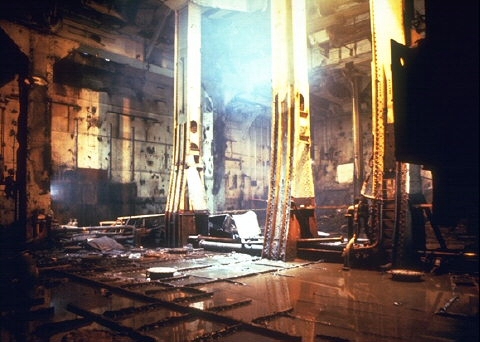
On December 11th, 1967, ownership was officially transferred from Cunard to the City of Long Beach. After thirty-one years, RMS Queen Mary was removed from the British Registry of Ships. She then underwent a massive three and a half year, $72,000,000 refit to turn her from a ship into a museum and a hotel. Although she would continue to be owned by the City of Long Beach, they would lease the operation of the ship to outside sources, who would variously run the hotel services, the banqueting/event services and the museums. The new owners decided not to preserve her as an ocean liner. It had been decided to clear almost every area of the ship below "R" deck (so named, as the original ship’s restaurants were located on "R" deck) to make way for Jacques Cousteau's new Living Sea Museum. This would increase museum space to 400,000 square feet. It required removal of all the boiler rooms, the forward engine room, both turbo generator rooms, the ship stabilizers and the water softening plant. The ship's now empty fuel tanks were then filled with local mud, which would keep the ship's center of gravity and draft at the correct levels. |

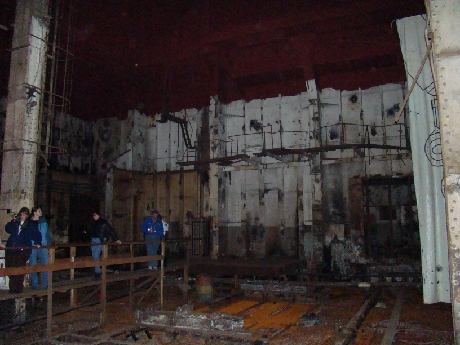
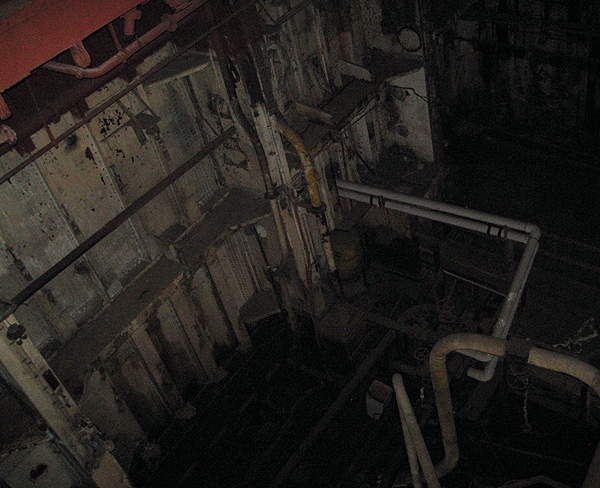

|
A Parade of Management Companies
And severe mismanagement...
With all of the lower decks nearly gutted from R deck and down, Diner’s Club, the initial lessee of the ship, was to convert the remainder of the vessel into a hotel. Diners Club Queen Mary dissolved and vacated the ship in 1970 after their parent company, Diners Club International, was sold, and a change in corporate direction was mandated amidst the conversion process. Specialty Restaurants, a Los Angeles-based company that focused on theme based restaurants, took over as master lessee the following year. During this conversion, the plan was to convert most of her first and second class cabins on A and B decks only into hotel rooms, and convert the main lounges and dining rooms into banquet spaces. On the Promenade Deck, the starboard promenade would be enclosed to feature an upscale restaurant called Lord Nelson's and café called Lady Hamilton's, which would be themed like early 19th century sailing ships. The famed and elegant Observation Bar was redecorated as a western themed bar. A post war feature of the ship, the first class cinema, was removed for kitchen space for the new Promenade Deck dining venues. The first class lounge and smoking room were reconfigured and converted into banquet space, while the second class smoking room was subdivided into a wedding chapel and office space. On the Sun Deck, the elegant Verandah Grill would be gutted and converted into a fast food eatery, while a new upscale dining venue was created directly above it on the Sports Deck in space once used for crew quarters. The second class lounges were expanded to the sides of the ship and used for banqueting. On R deck, the first class dining room was reconfigured and subdivided into two banquet venues, the Royal Salon and the Windsor Room. The second class dining room was subdivided into kitchen storage and a crew mess hall, while the third class dining room was initially used as storage and crew space. Also on R deck, the first class Turkish bath complex, the 1930s equivalent to a spa, was removed. The second class pool was removed and its space initially used for office space, while the first class swimming pool was used for hotel guests. Combined with modern safety codes and the structural soundness of the area directly below, the swimming pool would eventually be drained and taken out of use. Other than the quarters of the Captain and other high ranking officers (which can now be seen as part of the self-guided museum tour), no crew cabins would remain intact.
|

|
A Troubled Tourist Attraction
And the Revolving Door of Management Continues...
On May 8, 1971, Queen Mary opened her doors to tourists. Initially, only portions of the ship were open to the public, as Specialty Restaurants had yet to open its dining venues and PSA had not completed work converting the ship's original First Class staterooms into the hotel. As a result, the ship was only open on weekends. On December 11, 1971, Jacques Cousteau’s Museum of the Sea opened, with only a quarter of the planned exhibits built. Within the decade, Cousteau's museum closed due to low ticket sales and the deaths of many of the fish that were housed in the museum. On November 2, 1972, PSA's hotel opened its initial 150 guest rooms. Two years later, with all 400 rooms finished, PSA brought in Hyatt Hotels to manage the hotel. It operated from 1974 to 1980 as the Queen Mary Hyatt Hotel. By 1980, it had become apparent that the existing system was a disaster. The ship was losing millions each year for the city, because the hotel, restaurants and museum were run by three separate concessionaires, while the city owned the vessel and operated guided tours. It was decided that a single operator with more experience in attractions was needed. Luckily Jack Wrather, a local millionaire, had fallen in love with the ship, as he and his wife had fond memories of sailing on her numerous times. Wrather signed a 66-year lease with the City of Long Beach to operate the entire property. He made arrangements for the Queen Mary to be joined by Howard Hughes’ infamous plane, the Spruce Goose, on long-term loan. The immense plane, which had been sitting in a hangar in Long beach for decades, unseen by the public, was installed in a huge geodesic dome adjacent to the liner in 1983, increasing attendance enormously. His Wrather Port Properties operated the entire attraction after his death in 1984 until 1988. |
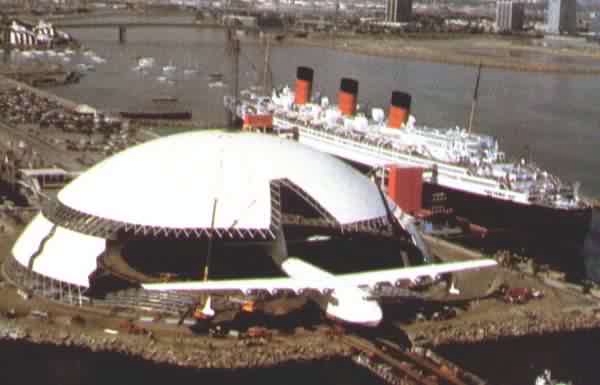
|
Enter Disney
But not for long...
In 1988, Jack Wrather’s holdings were bought by the Walt Disney Company. Wrather had built the Disneyland Hotel in 1955, when Walt Disney had insufficient funds to construct the resort himself, and Disney had been trying to buy the hotel for 30 years. When they finally succeeded, they also ended up with the Queen Mary. As the Queen Mary was more of an afterthought than a primary focus in the Wrather acquisitions, she was never marketed as a Disney property. Through the late eighties and early nineties, Queen Mary struggled financially. Disney pinned their hopes for turning the attraction around by creating “Port Disney”, a huge resort, which would be built on the adjacent docks. It was to include a theme park known as “DisneySea”, themed around the world's oceans. The Queen Mary would serve as the symbol of the park and resort (much as the Castle’s do in the various Disney theme parks around the world, in addition to being one of the hotel options for visiting guests. As Long Beach was only 30 minutes away from Disneyland, the hope was that guests would split their time between the two parks. The plans eventually fell through, though, and in 1992 Disney gave up the lease on the ship to focus on building what would become Disney’s California Adventure Park. The DisneySea concept was recycled a decade later in Japan as “Tokyo DisneySea” with a recreated ocean liner resembling Queen Mary as its centerpiece. |

|
The Doors Close
And then Open Again...
With Disney gone, the Hotel Queen Mary closed on September 30, 1992, and the owners of the Spruce Goose, the Aero Club of Southern California, sold it to the Evergreen Aviation & Space Museum in Oregon. The plane departed on barges on October 2, 1992, leaving the huge dome empty. The Queen Mary tourist attraction remained open for another two months, but on December 31, 1992, the Queen Mary completely closed her doors to tourists and visitors. On February 5, 1993, RMS Foundation, Inc. signed a five-year lease with the city of Long Beach to act as the operators of the property. The foundation was run by President and C.E.O. Joseph Prevratil, who had also managed the attraction for Wrather. On February 26, 1993, the tourist attraction reopened completely, while the hotel reopened partially on March 5 with 125 rooms and the banquet facilities. The remainder of the rooms coming online on April 30. In 1995, RMS Foundation's lease was extended to twenty years, while the extent of the lease was reduced to simply maintain operation of the ship itself. |
|
The Phoenix Rising
Save the Queen...
In Summer 2007,Queen Mary's lease was sold to a group named "Save the Queen" managed by Hostmark Hospitality Group, who planned to develop the land adjacent to Queen Mary, and upgrade, renovate, and restore the ship to her original condition. During the time of their management, staterooms were updated with flatscreen TVs and the ship's three funnels as well as the waterline area were repainted their original Cunard Red color. The portside Promenade Deck's planking was restored and refinished. Many lifeboats were repaired and patched, and the ship's kitchens were renovated with new equipment. With the addition of funding from the Garrison Investment Group, “Save The Queen LLC” became the current lease holder, and has continued to lovingly restore the ship and to bring her back to life. Slowly but surely, long neglected and abused areas of the ship are being revitalized, and the focus is on restoration, not repurposing. The staterooms have all been updated to include luxurious linens and high quality mattresses. The food in the various restaurants (and catering services) on board has reached a level of excellence not known since the days when she sailed the high seas. The staff is passionate about their place in the history of this great liner, and continues to work hard to provide the excellence that Cunard White Star was so known for. And for us, as a couple about to be married on the ship, we are thrilled at how welcoming the Queen Mary and her staff have been to us, and how easy they have made the planning of our very special weekend. We were thrilled beyond belief with our menu tastings, and cannot wait for all of you to enjoy the culinary masterpieces that we were served when choosing our final menu. We hope that many of you will plan to stay on board, as it will not just be a wonderful way to get away for a couple of days (and provide very easy access to your hotel room from our various wedding events), but in staying on board, you, too, will have a part in helping to keep this wonderful Grand Lady alive. Well attended events and tours, and sold out hotel rooms means security for the Queen Mary. And we are thrilled that our wedding will contribute to assuring her future. And we are extremely grateful to the current owners of the ship and Save Queen Mary LLC, for doing so much to restore and revitalize the ship. In the wake of the destructive handling by previous management companies, the ship that you see today might have bore little resemblance to the historical pictures of her. But thanks to Save Queen Mary and their financiers, you’ll get to experience her as she should be experienced, shining and proud. |
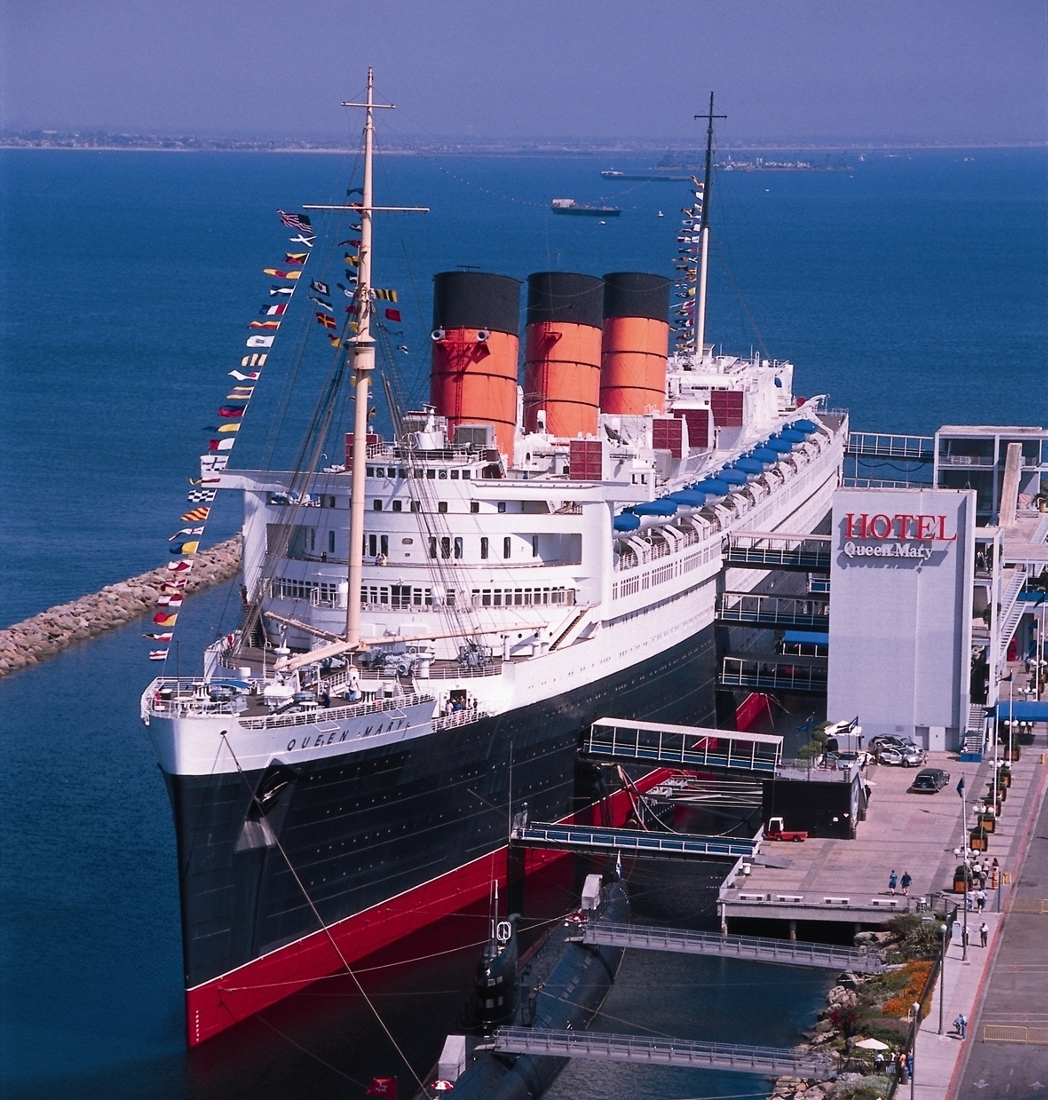
|
A Royal Rendezvous
The Meeting of the Queens...
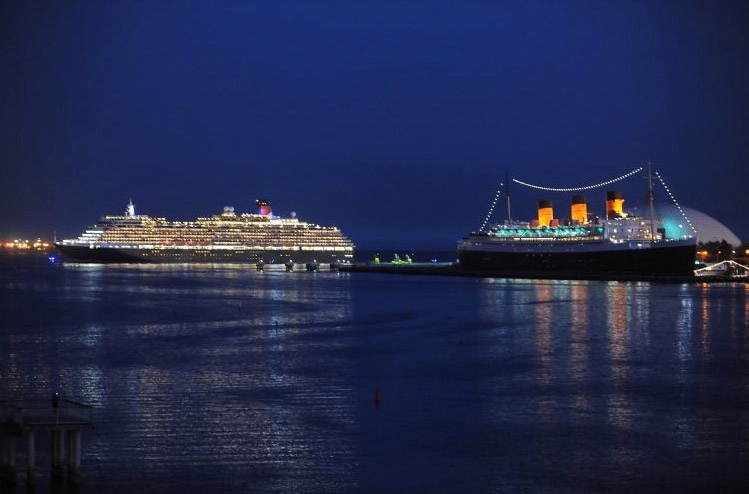
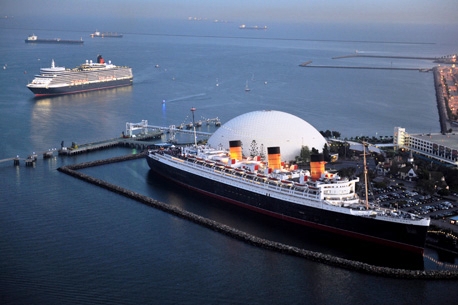
In January of 2004, Cunard once again returned to prominence with the christening of their newest ship, the Queen Mary 2. Queen Mary 2 would be inspired by her original namesake, and would include many design details that adorned her older sister. Queen Mary 2 would have another distinction: not only would she be the only true Ocean Liner to currently sail the world (all the rest are "cruise ships", which is a different animal altogether), but she would also be the largest Ocean Liner ever to be built. At 1,132 feet long, 236 feet high, with a total of 17 decks, she would be almost double the size of her namesake. And once again, the Cunard White Star name would stand for excellence, elegance and history. In a bow to tradition and history, the Queen Mary would permanently loan one of her original horns to the Queen Mary 2, and as the she pulls out of port in New York and Southampton, that original horn can once again be heard. On February 23, 2006, the RMS Queen Mary 2 paid a visit to Long Beach, and for the first time, the two grand Ocean Liners bearing the name "Queen Mary" would meet. There was much celebration in the air that day, as the heir saluted the predecessor, allowing the old Queen Mary to once again hear her horn, which is now proudly displayed on her younger sister. |

|
More "Family" Reunions
Cunard Continues the Tradition...
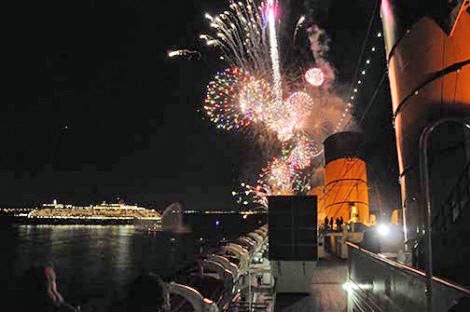
With the great success of the Queen Mary 2, Cunard commissioned two more ships. These would not be true ocean liners, like their flagship sister, but they would continue the elegance and standard of "White Star Service" that has come to be expected by passengers traveling on Cunard. The first ship would be named "Queen Victoria", finally allowing Cunard to have a ship named after their original "England's Greatest Queen" plan. Queen Victoria would be followed a couple of years later by her twin, Queen Elizabeth. As the original Queen Elizabeth (the running mate of Queen Mary) had been named after the then current Queen Elizabeth (who is now referred to as "the Queen Mother", but did bear the same first name as her long-reigning daughter), the QE2, was technically named after that original ship, and not named for England's current reigning monarch. So, to honor the current Queen, the new ship was simply dubbed "Queen Elizabeth", allowing for the current Queen to have a namesake ship that was truly named for her. In March of 2011, the new Queen Victoria visited Long Beach to salute her elder relative. And in March of 2013, the new Queen Elizabeth also visited to pay tribute. During both meetings, the skies were filled with fireworks to celebrate the occasion. |


|
And Queen Elizabeth Makes Her Visit
|


|
The Future Looks Bright
The Queen Still Reigns
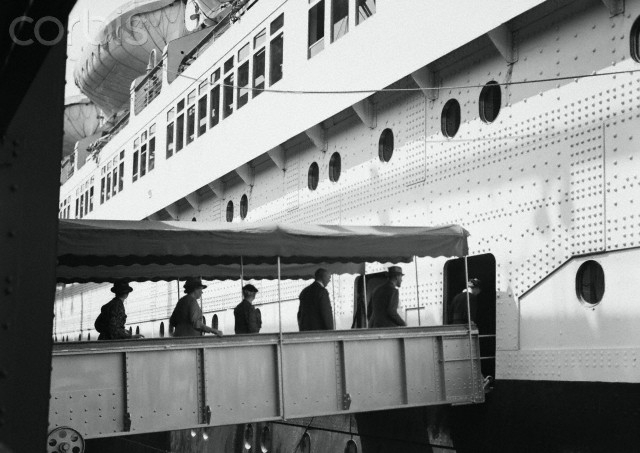
We hope you have enjoyed this history of the Queen Mary, and will feel even more connected to the location where we are having our wedding and reception. We hope that you'll come to love this grand ship as much as we do, and now, by understanding just how extensive her history is, we hope that staying on board and exploring her will be far more interesting and exciting for you. Most people don't realize just how rich her history is, and since we've announced our wedding location, there have been many who have responded with such statements as "isn't that the old ship that is south of Los Angeles?" and "is it something like the Titanic?". Some people knew bits and pieces about her, and others had only heard the stories of the days of mismanagement, deterioration and poor upkeep. Even with all of his passion for this wonderful ship, even Henry remembers visiting her during the "bad years", when things were very run down and the only food on board was from a dingy snack bar that left Henry with one of the worst cases of food poisoning he'd ever had. Happily, that dingy snack bar is nowhere to be found anymore, and after our recent stay on board to make wedding plans, we can report that the food was exquisite, no matter which venue you choose. The cafe serves a beautiful breakfast, the tea room serves a proper British High Tea service (with the most delicious scones and clotted cream this side of the Atlantic!), the two main restaurants are absolutely wonderful, and there's even a Starbucks on board, in case you can't live without your Vente Macchiato. There is even room service on board, and you can have your breakfast delivered to you in bed. The museums have been beautifully updated, even including a wonderful Princess Diana exhibit that includes many of her clothes and personal possessions letters. Both the self guided tours and the organized guided tours are quite wonderful. And as a guest, you can explore on your own all that you want, without paying any admission fees. We planned an evening wedding, specifically so that everyone can enjoy this wonderful ship. Whether you spend your day on tours, or spend it sitting in a classic wooden deck chair reading a book, you're sure to feel the magic of this magnificent ship. And we hope that you'll feel a bit of her history come to life for you as you stay on her. |




|
A Post Script
Did someone say "ghost"?
All right, yes, another great appeal that the ship has to the public now, is the constant speculation that the ship is haunted. For those of you who are not interested in that sort of thing, I suggest you stop reading now, and just enjoy the history that you've just finished reading. I can honestly report that I've stayed on board her many nights, and never had any unwelcome visitors! For the rest of you - yes, Queen Mary was voted by Time Magazine as "one of the most haunted places in America". Since her docking in Long Beach, she's been the subject of much controversy regarding the "hauntings". Some have proven false, and some still remain up for debate. The ship has responded to the enthusiasm of the "ghost hunters" (and the curious) with a number of "haunted tours". These range from the "shock and scare" haunted house type entertainment (complete with tours through rooms that suddenly go black, or fill with fog, or feature any number of "scary" sound effects) to the more informative "this is what has been reported in this location" type tours. There are even late night flashlight tours that are quite popular. Also throughout the ship, are little subtle framed "accountings" of various ghost sightings that you can read on your own self guided tour. Of course, there are the well documented ghosts, like the little girl who just wants comforting in the First Class Pool, or the ghost of the crew members who lost their lives on board during various tragic occurrences (most of which were during wartime, and not during passenger service). Not to mention the repeated sightings of a "lady in white". If you want to ghost hunt, there's plenty for to entertain you on board. There are also numerous television shows and YouTube videos documenting the various paranormal activity that has been experienced on the ship. I won't include any of the stories here, as we want this section to be celebrating the history of this fine ship, and not scare any of you away from her! But as our wedding is in October, and October is the month of Halloween, the Queen Mary has seen much profit in promoting the haunted aspects of the ship during the month of October - even including an enormous "Dark Harbor" temporary amusement park in one of the adjacent parking lots to the ship, which will be in full swing when we arrive for the wedding. Thankfully, it only runs 8 p.m. til midnight, and so we won't have to contend with any of it's noise during our ceremony. But that is another added bonus for any of you that enjoy being scared - you can pay whatever their admission fee is, and walk through any number of "haunted" houses that fill the temporary amusement park. |
